 彩縁舎
彩縁舎月別: 2025年6月
Poker Analyzer Accessories That Maximize Your Winning Edge
The Ecosystem Beyond the Analyzer
A poker analyzer is rarely deployed as a standalone device. The full power of the system is realized when it is paired with a carefully selected set of accessories — each designed to solve a specific operational challenge, enhance concealment, or extend the system’s functionality. For wholesalers and distributors, accessories represent a high-margin, recurring-revenue opportunity that complements the core analyzer business.
A customer who buys an analyzer will inevitably need decks, earpieces, external cameras, and protective accessories. Those who buy a complete package are more satisfied and more likely to return for replenishment orders. Understanding the full accessory ecosystem — and how to position each component — is a key differentiator for successful distributors.
Hidden Earpiece — The Critical Audio Link
The hidden earpiece is the component that delivers the analyzer’s result directly to the user’s ear, completing the information chain. Without it, the analyzer’s analysis is useless at the table.
How Hidden Earpieces Work
A hidden earpiece is a miniature wireless audio receiver that fits entirely inside the ear canal. It has no external wires, no visible components, and — critically — no removal mechanism that someone watching can easily spot. The earpiece receives audio signals from a small Bluetooth transmitter that is connected to the poker analyzer, typically clipped to the user’s clothing or placed in a pocket.
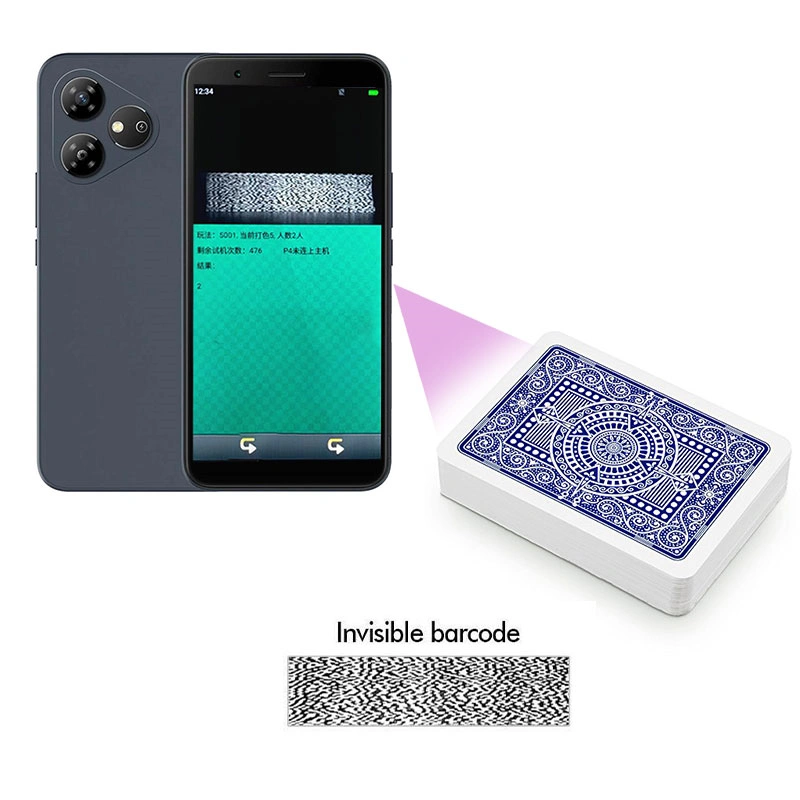
The audio signal is a brief, coded tone or spoken number identifying the winning seat. The earpiece volume is adjustable and can be set to a level that is clearly audible to the user while remaining completely inaudible to anyone else in the room.
Wearing Tips and Volume Control
Proper insertion is critical for both audio clarity and discretion. The earpiece should be inserted into the ear canal with a gentle twisting motion, seating it deeply enough that it is invisible from the front. If the earpiece is not seated properly, audio quality degrades and the risk of it falling out increases.
Volume is controlled via the paired transmitter’s dial or through the analyzer’s Bluetooth settings. The optimal volume setting is the lowest level at which the result is clearly audible — this minimizes the already negligible risk of sound leakage. Distributors should include a brief wearing guide with every earpiece shipment.
Durability and Battery Life
Most hidden earpieces provide 4 to 6 hours of continuous operation on a single charge. The charging case typically provides 2 to 3 full recharges before needing its own power source. For extended sessions, carrying a spare earpiece or a portable charging case is recommended.
External Scanner Camera — Extending the Scan Zone
While every poker analyzer includes a built-in camera, an external scanner camera dramatically expands the system’s flexibility. These wireless cameras can be positioned independently of the analyzer, allowing the user to scan cards from angles and distances that would be impossible with the built-in camera alone.
Disguised Camera Options
The true power of external cameras lies in their concealment. They are designed to look like everyday objects, with the camera lens hidden in plain sight.
Watch-mounted camera. A seemingly ordinary wristwatch with the camera lens embedded in the watch face or bezel. Ideal for close-range scanning when the user’s hand is near the card area.
Power bank camera. A standard portable power bank with the camera concealed in one of the corners. Can be placed on the table as a charging device while actively scanning cards.
Cigarette pack camera. A realistic cigarette pack with the camera lens hidden in the graphic design. Popular in markets where smoking is common and a pack on the table is natural.

Phone case camera. A smartphone protective case with a hidden camera module. The case looks like a normal accessory, but the embedded camera provides a second scanning angle separate from the analyzer’s built-in camera.
Button camera. An external camera disguised as a shirt or jacket button. The camera is positioned at chest level, providing a downward scanning angle that is very difficult to detect.
Wireless Connectivity and Range
External scanner cameras connect to the poker analyzer via a dedicated wireless channel, typically operating in the 2.4 GHz or 5 GHz band. The effective range is 5 to 15 meters, depending on the model and environmental interference. Most systems support automatic frequency hopping to maintain a stable connection in RF-crowded environments.
Multi-Camera Setups
Premium analyzers like the AKK A6 support simultaneous connection of two external cameras. This redundancy ensures that if one camera’s line of sight is blocked — by a player’s arm, a drink, or a stack of chips — the second camera can still capture the card edges. For professional-grade setups, multi-camera configurations are strongly recommended.
Infrared Contact Lenses — Seeing the Invisible
Infrared contact lenses are a specialized accessory that allows the user to see markings printed with infrared-reflective ink. Unlike barcode marked cards, which require a scanner and analyzer, infrared contact lenses enable direct visual reading of marked cards.
How Infrared Contacts Work
The contact lenses are printed with a specialized infrared-pass filter in a specific region of the lens. When the user looks at a card marked with infrared ink, the markings become visible as a contrasting pattern against the card’s surface. The rest of the card appears normal.
The lenses are comfortable for extended wear and provide clear vision for normal activities when not viewing marked cards. They are available in both prescription and non-prescription versions.
Integration with Analyzer Systems
Infrared contact lenses are not a replacement for a poker analyzer — they serve a complementary role. In some scenarios, the user may want to verify specific cards visually rather than relying solely on the analyzer’s audio result. The combination of analyzer + infrared contacts provides both technological and visual confirmation.
Care and Handling
Infrared contact lenses require the same care as standard contact lenses. They should be cleaned with appropriate lens solution, stored in a sterile case, and replaced according to the manufacturer’s recommended schedule. Distributors should advise customers to order replacement lenses in advance, as custom infrared contacts may have longer lead times than standard lenses.
Invisible Ink Glasses — An Alternative Visual Solution
Invisible ink glasses provide the same infrared-visible functionality as contact lenses but in a frame-mounted format. These glasses have lenses treated with an infrared-pass coating that reveals markings printed with corresponding invisible ink.
Advantages Over Contact Lenses
For users who do not wear or are uncomfortable with contact lenses, invisible ink glasses are the natural alternative. They are easier to put on and remove, do not require sterile handling, and can be worn over existing prescription glasses in some frame designs.
The trade-off is concealment. While infrared contact lenses are completely invisible to observers, invisible ink glasses — though they look like normal eyewear — may draw attention if the user does not normally wear glasses. Distributors should help customers evaluate this trade-off based on their typical appearance at the table.
Compatibility with Marked Decks
Invisible ink glasses work with cards marked using infrared-reflective ink. This is a different marking method than edge barcodes, so the glasses cannot read standard barcode-marked decks. However, many suppliers offer dual-marked decks that include both barcode edge markings and infrared face markings, allowing the same deck to work with both analyzers and visual-reading accessories PokerAnalyzerShop.
Dice Analysis Devices — Expanding Beyond Cards
For distributors serving markets where dice-based games are popular, dice analysis devices are a valuable addition to the catalog. These devices use high-speed optical sensors to read markings on casino-grade dice and predict dice outcomes.
Technology and Operation
Dice analysis devices work on a principle similar to card analyzers. The dice are marked with tiny, invisible codes on one or more faces. A high-speed camera captures the dice as they are thrown or come to rest, and the analysis software calculates the most likely outcome based on the visible face markings and the known physics of the dice throw.
The result is transmitted to a hidden earpiece, just like a poker analyzer. Some devices also support vibration alerts for completely silent notification.
Integration with Existing Systems
Some advanced analyzers, including certain AKK and CVK models, can load dice analysis profiles alongside card game profiles. This allows a single analyzer device to handle both card and dice games, switching between modes through the settings menu. Distributors should confirm dice support when sourcing analyzers for mixed-game markets.
Accessory Bundles — The Distributor Advantage
Offering pre-configured accessory bundles is one of the most effective ways to increase average order value and reduce customer setup friction. A typical bundle might include:
– 1 poker analyzer
– 3 marked decks (rotating stock)
– 2 hidden earpieces (primary + spare)
– 1 external scanner camera (disguised as watch or power bank)
– 1 cleaning kit for marked decks
– 1 carrying case for the complete system
Bundles simplify the customer’s decision process, ensure compatibility across components, and provide a higher perceived value than à la carte purchasing. For distributors, bundles also streamline inventory planning and can be marketed as exclusive packages that differentiate your offering from competitors.
FAQ
What is the most commonly replaced accessory?
Marked decks have the highest replacement frequency, as they wear out with use. Most customers reorder decks every 3 to 6 months depending on usage volume. Hidden earpieces and external cameras have much longer lifespans and are typically replaced only if lost or damaged.
Can a single hidden earpiece work with multiple analyzers?
Yes, provided the analyzers use compatible Bluetooth protocols. Most modern analyzers and earpieces follow standard Bluetooth audio profiles, making cross-compatibility straightforward. However, some specialized earpieces use proprietary pairing — distributors should verify compatibility when mixing brands.
How many external cameras should a customer buy?
One is sufficient for basic operation. Two are recommended for professional setups where scanning redundancy is important. The AKK A6 supports dual cameras, and the added reliability often justifies the investment for high-stakes users.
Are infrared contact lenses safe for extended wear?
Yes, when used according to the manufacturer’s wearing schedule. Most infrared contact lenses are designed for daily wear of up to 8 hours. They should be removed and cleaned nightly. Customers with pre-existing eye conditions should consult an optometrist before use.
Do invisible ink glasses work in all lighting conditions?
Invisible ink glasses perform best in indoor lighting conditions. Extremely bright outdoor sunlight can overwhelm the infrared contrast, making the markings less visible. For indoor games, they perform reliably across standard lighting setups.
Can dice analysis devices be used in all dice games?
Dice analysis devices are optimized for standard casino dice games such as Craps and Sic Bo. They require the dice to be marked with compatible invisible codes. Not all dice games are supported, and distributors should confirm game compatibility before recommending these devices to customers.
Casino Table Inventory Management with RFID Technology
Casino chip inventory management is one of the most resource-intensive operational functions in gaming facilities. A mid-sized casino maintains between $5 million and $15 million in active chip inventory across the floor, cage, count room, and off-site storage. Tracking this inventory manually — through physical counts, paper logs, and periodic audits — consumes hundreds of staff hours per month and leaves significant gaps in accountability. RFID technology transforms this process from a labor-intensive manual task into a real-time, automated system that provides continuous visibility into every chip’s location and status.
The Scale of Chip Inventory Management
To understand the impact of RFID, consider the inventory scope at a typical integrated resort. A property with 100 table games operates with an active chip pool of 800,000 to 1.2 million individual chips RFID Baccarat Table. These chips are distributed across:
– Table trays (approximately 15,000-20,000 chips in active play)
– Cage inventory (200,000-400,000 chips available for buy-ins and exchanges)
– Count room reserves (300,000-500,000 chips in various denominations)
– Off-site storage (200,000-400,000 chips for future expansion or replenishment)
Every day, tens of thousands of chips move between these locations. A single shift change at a high-limit baccarat table can involve $500,000 in chip transfers. Without RFID, each transfer requires a manual count, a written record, and dual verification by two staff members. Even with these controls, discrepancies occur regularly, and resolving them requires time-consuming recounts and investigations.
How RFID Enables Real-Time Inventory Visibility
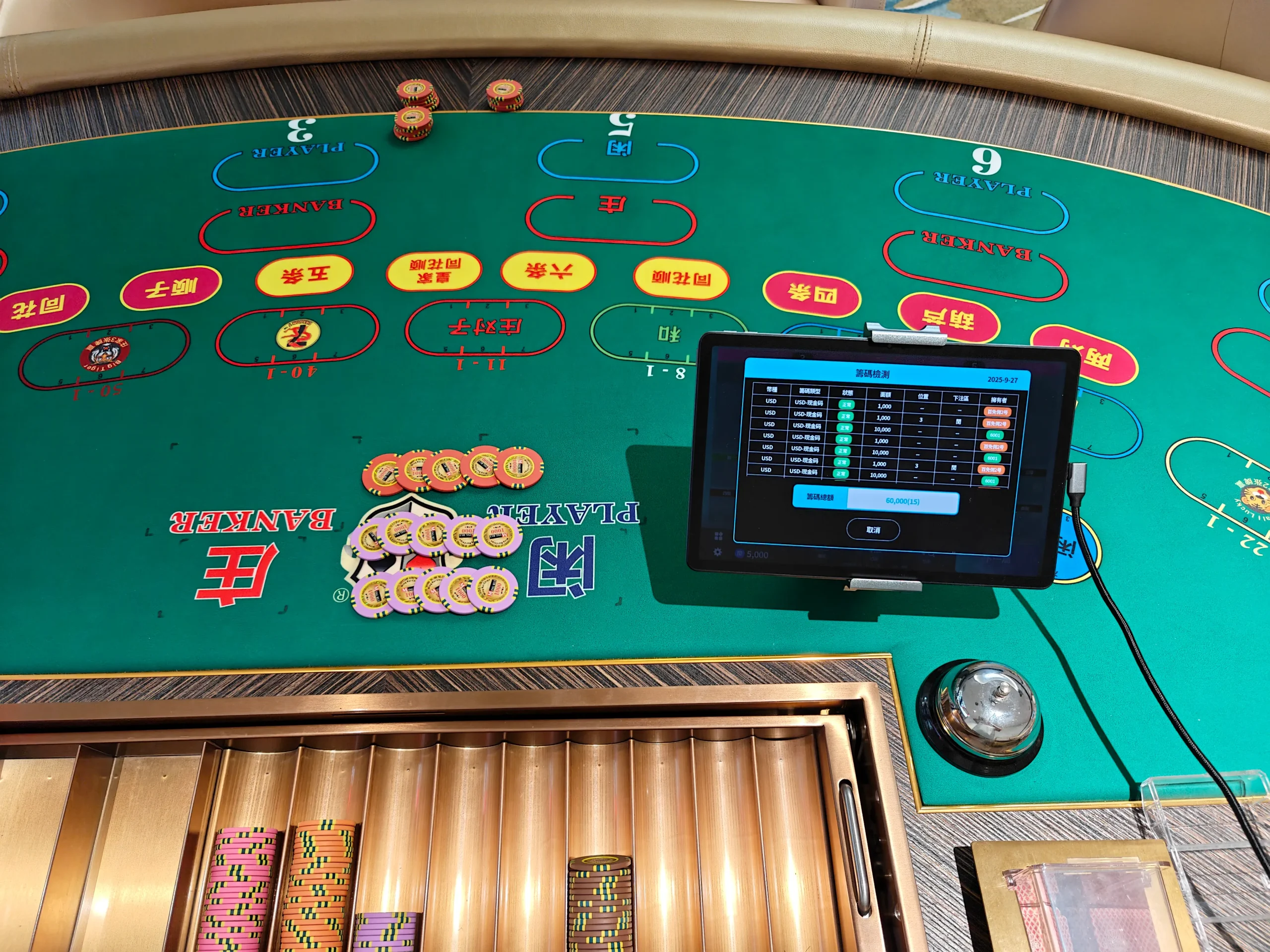
RFID chip tracking creates a continuous, automated inventory system. Every chip carries a unique RFID tag that identifies its denomination, series, and status. Fixed RFID readers at strategic locations — cage windows, count room portals, and table tray sensors — read chips as they move, updating the inventory database in real time.
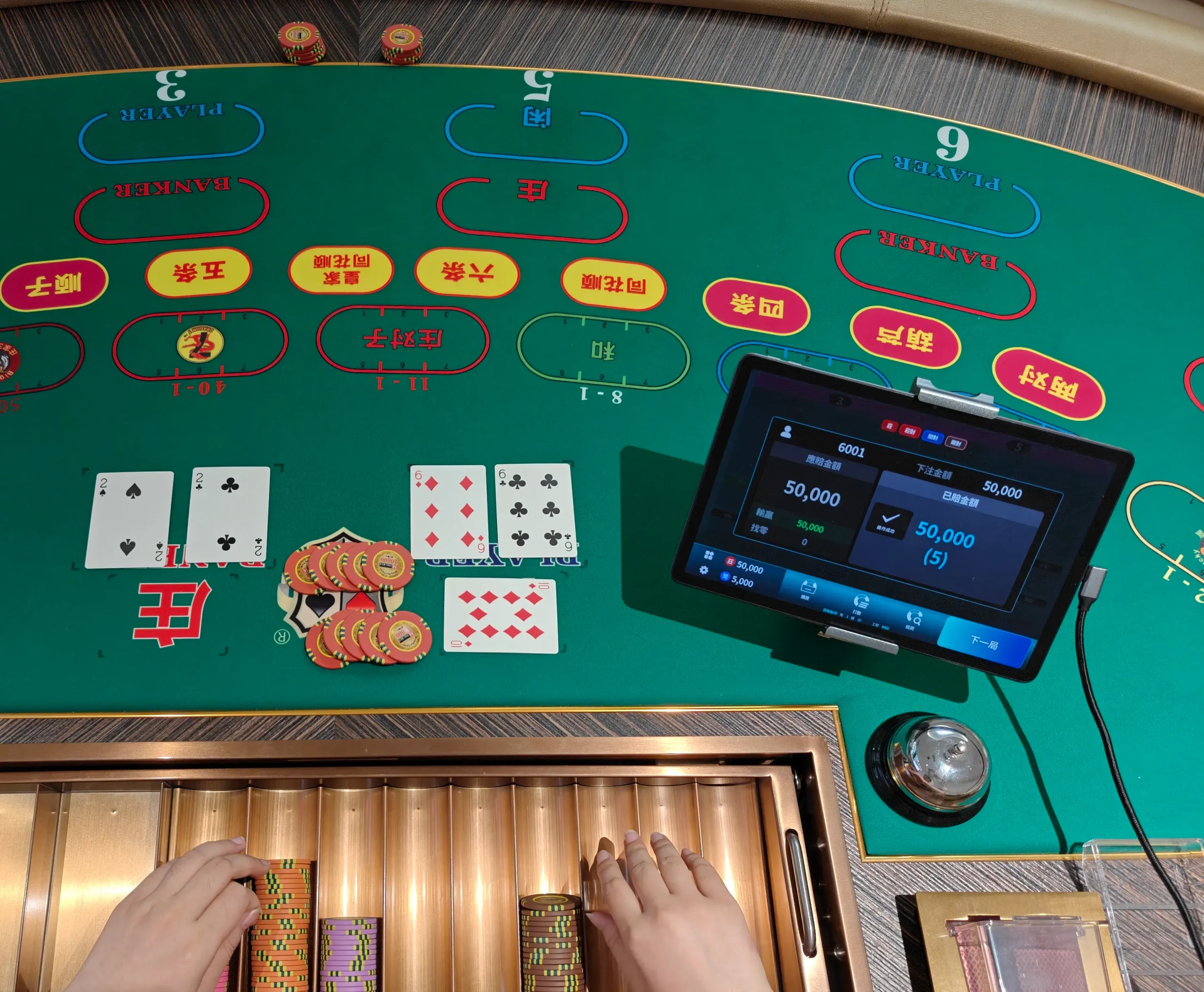
The inventory management system maintains a live database of every chip’s last known location. When a chip moves from a table tray to a dealer’s hand, the system logs the movement. When the dealer delivers the chip to the cage, the cage portal reader confirms the transfer. The result is a complete chain of custody for every chip in the casino’s inventory.
This visibility eliminates the blind spots that plague manual inventory systems. A pit manager can pull up a dashboard showing exactly how many $100 chips are currently at each table, how many are in the cage, and how many are in transit. If a discrepancy appears — such as a table reporting 150 $100 chips but the system showing only 140 — the manager can investigate immediately rather than discovering the problem during the nightly count.
Zone-Based Inventory Tracking
RFID inventory systems use a zone-based architecture. The casino floor is divided into logical zones, each with one or more RFID readers. A zone might be a single table, a cage window, a count room portal, or a storage vault. When a chip enters a zone, the reader logs its arrival. When it leaves, the system records the departure.
Zone transitions are tracked with timestamps, creating a movement history for each chip. This history serves multiple purposes:
– **Audit trail:** Investigators can trace a chip’s movements backward to identify when and where a discrepancy occurred.
– **Operational analytics:** The system can identify bottlenecks in chip flow, such as cage windows that are slow to process transfers or count room portals that are underutilized.
– **Loss prevention:** If a chip leaves a zone without a corresponding entry into another zone, the system flags it as potentially missing or stolen.
The granularity of zone tracking can be configured based on operational needs. A high-limit area might track chips at the individual table level, while a mass-market area might aggregate tracking at the pit level. The system supports both approaches simultaneously.
Automated Reordering and Inventory Optimization
RFID inventory data enables sophisticated inventory optimization that was previously impossible. The system can predict chip demand based on historical patterns, current table utilization, and upcoming events. When inventory levels for a specific denomination fall below a configurable threshold, the system generates an automated reorder recommendation.
Consider a casino preparing for a major boxing weekend. Historical data shows that $100 chip demand increases by 40% during fight weekends, and $500 chip demand doubles. The inventory system can pre-position additional chips in the cage and at high-demand tables before the event begins, ensuring smooth operations without last-minute scrambling.
The system also identifies slow-moving inventory. Chips in rarely used denominations — such as $2 chips in a property that primarily uses $5 minimums — can be identified and either retired or repurposed. This reduces the total inventory carrying cost and simplifies cage operations.
Count Room Efficiency
The count room is one of the largest beneficiaries of RFID inventory management. Traditional chip counting involves sorting chips by denomination, counting each stack manually, and recording the totals on paper logs. A single count room session for a 100-table casino can take 4-6 hours and require 8-12 staff members.
RFID-enabled count rooms use automated chip counters that read tags as chips pass through a hopper or conveyor. A single automated counter can process 3,000-5,000 chips per minute with 99.99% accuracy, compared to 200-300 chips per minute for manual counting. The time savings are substantial: what previously required a team of 10 people working 5 hours can now be completed by 2 people in 90 minutes.
The automated counters also eliminate human error. Manual counting is subject to fatigue, distraction, and simple mistakes — especially during overnight shifts when count room staff are working at reduced alertness. RFID counters do not fatigue and do not make arithmetic errors.
Integration with Cage Operations
The cage is the primary interface between chip inventory and cash flow. RFID integration streamlines cage operations in several ways.
**Buy-in processing.** When a player buys in at a cage window, the RFID reader at the window reads the chips being issued, automatically deducting them from cage inventory and adding them to the player’s active chip balance. This eliminates manual counting and reduces buy-in time from 2-3 minutes to under 30 seconds.
**Chip exchanges.** Players frequently exchange chips of one denomination for another. The RFID system reads both the incoming and outgoing chips simultaneously, ensuring that the exchange is balanced and updating inventory in real time. The system also checks for counterfeit or unrecognized chips during the exchange, providing an additional security layer.
**End-of-shift procedures.** At shift end, cage staff must reconcile the chips on hand against the cage’s recorded inventory. RFID-enabled cage drawers provide real-time inventory counts, eliminating the need for manual counts. The reconciliation process, which previously took 30-45 minutes per cage window, now takes under 5 minutes.
Inventory Auditing and Compliance
Regulatory compliance requires casinos to maintain accurate, auditable records of chip inventory. RFID systems generate these records automatically, producing detailed audit trails that satisfy regulatory requirements in all major gaming jurisdictions.
The audit trail includes:
– Every chip movement with timestamp, location, and responsible staff member
– All inventory adjustments with reason codes and approval workflows
– Periodic inventory snapshots that can be compared against physical counts
– Exception reports highlighting discrepancies for investigation
When regulators conduct inventory audits, the RFID system can produce the required documentation in minutes rather than the hours or days required for manual record compilation. This reduces the operational disruption of audits and demonstrates a proactive approach to compliance that regulators view favorably.
Implementation Considerations
Deploying RFID inventory management requires careful planning. The casino must encode all existing chips with RFID tags — a process that can take 2-4 weeks for a property with 1 million chips. During this period, the casino operates with a hybrid inventory: some chips are RFID-enabled and tracked automatically, while others remain manually tracked.
The transition is typically managed in phases. High-denomination chips are encoded first, as they represent the greatest financial risk. Mass-market denominations follow. By the time the encoding is complete, the inventory system has accumulated sufficient data to begin generating meaningful analytics.
Staff training is another critical factor. Cage staff, count room staff, and pit managers must understand how to interpret RFID inventory data and how to respond to system alerts. Training programs typically require 4-8 hours per role, with follow-up sessions as the system’s capabilities are expanded.
Frequently Asked Questions
How long does it take to encode an entire casino’s chip inventory with RFID tags?
For a property with 1 million chips in active inventory, the encoding process typically takes 3-4 weeks when performed as a dedicated project. The process involves reading each chip’s existing tag (if pre-encoded by the manufacturer) or embedding and encoding new tags, then verifying the encoding. Many casinos perform the encoding in phases, starting with high-denomination chips, to minimize operational disruption Macaumr Casino Equipment.
Can RFID inventory systems detect when chips are removed from the casino floor without authorization?
Yes. RFID readers at all exits — including employee exits, delivery entrances, and cashier exits — can detect chips leaving the secure perimeter. The system can be configured to generate immediate alerts when chips pass through these portals without proper authorization. This creates a powerful deterrent against chip theft and provides investigators with real-time data when incidents occur.
What is the accuracy rate of RFID-based chip inventory counts compared to manual counts?
Well-deployed RFID inventory systems achieve 99.5-99.9% accuracy, compared to 95-98% for manual counts depending on staff experience and working conditions. The improvement comes from eliminating human error in counting, recording, and transcribing. Automated counters in the count room achieve 99.99% accuracy, effectively eliminating count errors as a source of inventory variance.
How does the system handle chips that are out of service for cleaning or repair?
Chips sent for cleaning or repair are tracked through a separate “maintenance” status in the inventory system. When chips leave the active inventory for maintenance, they are scanned out and their status is updated. When they return, they are scanned back in. This ensures that out-of-service chips do not appear as missing in inventory reports and provides a complete maintenance history for each chip.
Does RFID inventory tracking require changes to existing cage or count room workflows?
The core workflows remain similar, but the tools and speed change significantly. Cage staff still process buy-ins and exchanges, but they use RFID-enabled drawers and readers that automate the counting and recording. Count room staff still sort and verify chips, but they use automated counters that process chips at 10-20 times the speed of manual counting. Most staff report that RFID systems make their jobs easier and less error-prone, with the primary adjustment being trust in the automated counts.
RFID Casino Cage Management: Seamless Table-to-Cage Integration
The casino cage serves as the financial nerve center of every gaming operation. It processes player buy-ins, cashes out winnings, manages chip exchanges, and reconciles the daily flow of chips between the gaming floor and the count room. Traditional cage operations are heavily manual, requiring staff to physically count chips, record transactions by hand, and verify identities through visual inspection. RFID technology transforms cage management by automating these processes and creating a seamless, real-time connection between table-level chip tracking and cage-level financial processing.

The Current State of Cage Operations
A typical casino cage handles between 200 and 500 transactions per hour during peak periods. Each transaction involves counting chips (which takes 1-3 minutes for a standard buy-in), recording the transaction details, updating the cage’s inventory records, and processing the corresponding cash movement. At peak volume, cage staff are processing transactions as fast as they can, and any delay creates a queue that frustrates players and reduces floor throughput.
The manual nature of cage operations creates several pain points:
**Counting errors.** Fatigue, distraction, and time pressure lead to counting errors that cascade through the reconciliation process. A single miscounted $100 chip can trigger a 30-minute variance investigation.
**Transaction bottlenecks.** During peak hours — especially around tournament breaks, fight nights, and holiday weekends — cage windows can develop 15-20 minute queues. Players waiting in line are not on the floor generating revenue.
**Inventory blind spots.** The cage’s chip inventory is updated only when transactions are recorded. Between transactions, the cage staff does not have a real-time view of current holdings Smart Gaming Table.
**Verification delays.** Checking whether a chip is authentic, belongs to the casino, and is in active circulation requires manual reference to printed or electronic chip logs.
RFID addresses each of these pain points through automation and real-time data integration.
RFID-Enabled Cage Windows
The core of RFID cage management is the RFID-enabled cage window. Each window is equipped with a reader array that can process chips in bulk — reading an entire stack of 50 chips in under 2 seconds. The reader identifies each chip’s denomination, unique serial number, and casino identifier, providing an instant, accurate count that eliminates manual counting entirely.
The cage window workflow changes dramatically with RFID:
**Buy-in processing.** The player presents cash at the window. The cage staff enters the buy-in amount into the system. The system calculates the optimal chip mix for the buy-in (based on the table the player intends to play and the available cage inventory) and presents the recommended denominations. The staff retrieves the chips from RFID-enabled drawers that automatically track which chips are being issued. The entire transaction is completed in under 30 seconds, compared to 2-3 minutes for manual processing.
**Cash-out processing.** The player presents chips at the window. The RFID reader reads the entire stack instantly, confirming the total value and verifying each chip’s authenticity and active status. If any chip is flagged — counterfeit, from another casino, or previously reported stolen — the system generates an alert and the transaction is paused for verification. For valid chips, the cash amount is calculated automatically and the transaction is processed.
**Chip exchange.** The player requests an exchange (e.g., trading $5 chips for $100 chips). The RFID reader reads the incoming chips, the system verifies them, calculates the equivalent value, and the staff issues the requested denominations from RFID-enabled drawers. Both sides of the transaction are logged simultaneously.

Table-to-Cage Data Flow
The transformative aspect of RFID cage management is not the window-level automation but the seamless data flow between the gaming floor and the cage. Every chip movement at every RFID-equipped table is transmitted to the central management system, which the cage accesses in real time.
This data flow enables several capabilities that were previously impossible:
**Pre-arrival preparation.** When a player at a high-limit table requests a fill (additional chips delivered to the table from the cage), the table’s RFID system transmits the fill request with the exact denominations needed. The cage staff can prepare the fill before the runner arrives, reducing delivery time from 5-10 minutes to under 2 minutes. Faster fills mean less downtime at the table and more hands per hour.
**Automatic chip tracking.** When chips move from a table to the cage via a runner, the RFID system logs the transfer. The runner carries the chips in an RFID-enabled transport container that reads the chips during transit, creating a chain-of-custody record from table departure to cage arrival. The cage system matches the incoming chips against the transfer record, confirming that every chip accounted for at the table has arrived at the cage. Any discrepancy is flagged immediately.
**Real-time inventory management.** The cage’s chip inventory is updated continuously, not just when transactions are recorded. As chips leave the floor and enter the cage, the inventory automatically reflects the change. As chips leave the cage and return to the floor, the inventory adjusts accordingly. The cage manager can view the current inventory at any time, without waiting for a manual count.
RFID-Enabled Cash Drawers and Chip Storage
Modern RFID cage deployments include intelligent storage systems. Chip drawers in the cage are equipped with RFID readers that continuously monitor the contents of each drawer. When a staff member removes chips for a transaction, the system logs the removal. When chips are returned, the system logs the return.
This continuous monitoring eliminates the need for periodic drawer counts, which traditionally consume 30-45 minutes per shift per cage window. Instead, the system provides a live inventory count that can be verified at any time. The time savings alone — across a property with 8-12 cage windows — represents 8-12 hours of staff time per shift that can be redirected to customer service and higher-value activities.
The storage system also supports automated denomination management. When a drawer’s count of a specific denomination falls below a threshold, the system generates a replenishment request. When a drawer exceeds its capacity for a denomination, the system suggests a redistribution to other drawers or to the count room. This optimization reduces the frequency of denomination shortages that delay transactions and frustrate players.
Count Room Integration
The count room — where chips collected from table drop boxes are counted, verified, and reconciled — represents one of the most labor-intensive processes in casino operations. RFID integration transforms this process through automated counting and real-time reconciliation.
Traditional count room operations involve emptying drop boxes, sorting chips by denomination, counting each stack manually, and recording totals on paper logs. A single count room session for a 100-table property requires 4-6 hours and 8-12 staff members. RFID-enabled count rooms use automated chip counters that process 3,000-5,000 chips per minute, completing the count in under 90 minutes with 2-3 staff members.
The integration between table tracking and count room data creates an automated reconciliation process. The RFID system at each table logs every chip that enters the drop box. The count room system reads the same chips during the automated count. The two datasets are matched automatically, with discrepancies flagged for investigation. This eliminates the manual reconciliation process and reduces variance investigation time from hours to minutes.
Staff Optimization and Window Utilization
RFID cage management data enables optimization of cage staff deployment. Transaction volume data — collected by the RFID system for each window — reveals patterns that inform staffing decisions:
– Peak transaction periods (typically 6-8 PM and post-tournament breaks) can be identified precisely, allowing staff to be pre-positioned at high-volume windows.
– Low-volume windows can be identified and consolidated, reducing idle staff time.
– Transaction processing times can be tracked, identifying staff who need additional training or windows that need hardware maintenance.
The data also supports longer-term planning. Transaction volume trends over weeks and months inform decisions about cage expansion, window configuration, and staff hiring. When a property plans a major event — a poker tournament, a boxing match, a convention — the cage manager can use historical RFID data from similar events to predict transaction volumes and schedule staff accordingly.
Security and Audit Trail
RFID cage management provides a comprehensive audit trail that satisfies regulatory requirements and supports loss prevention investigations. Every transaction at every cage window is recorded with:
– Timestamp
– Staff member ID (captured from the staff login at the window terminal)
– Player ID (if the player is rated and identified)
– Chip IDs and denominations involved
– Transaction type (buy-in, cash-out, exchange, fill, credit)
– Verification status (all chips verified, flagged chips identified and disposition recorded)
This audit trail is available in real time for regulatory inspection and can be exported in standard formats for compliance reporting. When investigations reveal discrepancies between floor and cage records, the audit trail provides the data needed to trace the discrepancy to its source.
Frequently Asked Questions
How does the RFID system handle large cash-out transactions where a player brings thousands of chips to the cage?
The RFID reader array at the cage window can process up to 500 chips simultaneously in under 3 seconds. For larger transactions, the chips can be processed in batches, with each batch read and verified before the next. The system aggregates the total across all batches, providing a final count and verification in under 30 seconds regardless of transaction size. This is dramatically faster than manual counting, which can take 10-15 minutes for a large cash-out.
What happens if the cage RFID reader detects a chip that does not belong to the casino?
The system immediately pauses the transaction and generates an alert. The chip is flagged in the database as “foreign” — meaning it carries an RFID tag that does not match the casino’s configured tag parameters. The cage staff is prompted to examine the chip physically and determine its origin. Common scenarios include chips from affiliated properties (which may be exchangeable under inter-property agreements) and counterfeit chips (which are confiscated and reported to security). The system logs the disposition of every flagged chip, maintaining a complete record for compliance and investigation purposes Macaumr Casino Supplier.
Can RFID cage systems integrate with existing cage management software?
Most RFID cage systems provide REST APIs and SDKs that enable integration with existing cage management software, accounting systems, and regulatory reporting platforms. The integration typically requires configuration work by the casino’s IT team or the RFID vendor’s integration specialists, but the underlying data formats are standardized (using industry-standard EPC protocols for chip data and JSON/XML for transaction data). Integration timelines range from 2-4 weeks for simple connections to 8-12 weeks for complex, multi-system integrations.
Does RFID cage management require replacing existing cage hardware?
No. RFID readers are typically installed as add-ons to existing cage windows, without replacing the window structure, cash drawers, or security glass. The readers are mounted on the counter surface or integrated into existing chip trays. RFID-enabled chip drawers can replace existing drawers, but the drawer frames and cabinet structures remain unchanged. The installation is designed to be minimally disruptive, with most properties completing the hardware installation in 1-2 days per window.
How does the system maintain accuracy during periods of high transaction volume?
The RFID system’s read accuracy is independent of transaction volume. Each chip is read individually by its unique tag, and the anti-collision algorithms ensure that even large stacks are processed without data loss. The system’s processing capacity — up to 500 chips per 3-second read cycle — exceeds the practical transaction volume at even the busiest cage windows. During peak periods, the primary constraint is staff response time, not RFID system capacity.