 彩縁舎
彩縁舎Uncategorized
Poker Analyzer Accessories That Maximize Your Winning Edge
The Ecosystem Beyond the Analyzer
A poker analyzer is rarely deployed as a standalone device. The full power of the system is realized when it is paired with a carefully selected set of accessories — each designed to solve a specific operational challenge, enhance concealment, or extend the system’s functionality. For wholesalers and distributors, accessories represent a high-margin, recurring-revenue opportunity that complements the core analyzer business.
A customer who buys an analyzer will inevitably need decks, earpieces, external cameras, and protective accessories. Those who buy a complete package are more satisfied and more likely to return for replenishment orders. Understanding the full accessory ecosystem — and how to position each component — is a key differentiator for successful distributors.
Hidden Earpiece — The Critical Audio Link
The hidden earpiece is the component that delivers the analyzer’s result directly to the user’s ear, completing the information chain. Without it, the analyzer’s analysis is useless at the table.
How Hidden Earpieces Work
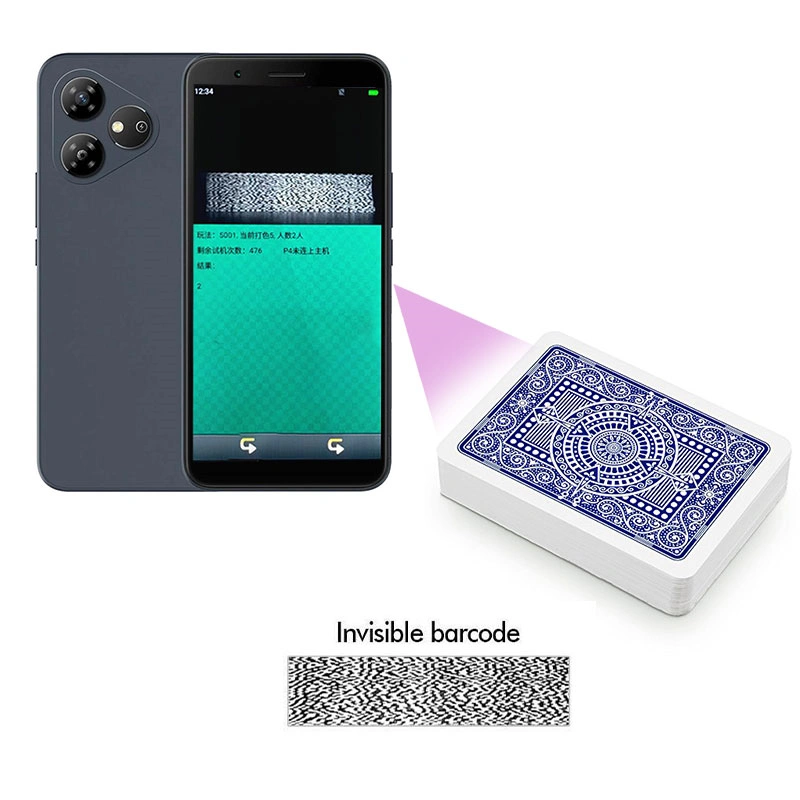
A hidden earpiece is a miniature wireless audio receiver that fits entirely inside the ear canal. It has no external wires, no visible components, and — critically — no removal mechanism that someone watching can easily spot. The earpiece receives audio signals from a small Bluetooth transmitter that is connected to the poker analyzer, typically clipped to the user’s clothing or placed in a pocket.
The audio signal is a brief, coded tone or spoken number identifying the winning seat. The earpiece volume is adjustable and can be set to a level that is clearly audible to the user while remaining completely inaudible to anyone else in the room.
Wearing Tips and Volume Control
Proper insertion is critical for both audio clarity and discretion. The earpiece should be inserted into the ear canal with a gentle twisting motion, seating it deeply enough that it is invisible from the front. If the earpiece is not seated properly, audio quality degrades and the risk of it falling out increases.
Volume is controlled via the paired transmitter’s dial or through the analyzer’s Bluetooth settings. The optimal volume setting is the lowest level at which the result is clearly audible — this minimizes the already negligible risk of sound leakage. Distributors should include a brief wearing guide with every earpiece shipment.
Durability and Battery Life
Most hidden earpieces provide 4 to 6 hours of continuous operation on a single charge. The charging case typically provides 2 to 3 full recharges before needing its own power source. For extended sessions, carrying a spare earpiece or a portable charging case is recommended.
External Scanner Camera — Extending the Scan Zone
While every poker analyzer includes a built-in camera, an external scanner camera dramatically expands the system’s flexibility. These wireless cameras can be positioned independently of the analyzer, allowing the user to scan cards from angles and distances that would be impossible with the built-in camera alone.
Disguised Camera Options
The true power of external cameras lies in their concealment. They are designed to look like everyday objects, with the camera lens hidden in plain sight.
Watch-mounted camera. A seemingly ordinary wristwatch with the camera lens embedded in the watch face or bezel. Ideal for close-range scanning when the user’s hand is near the card area.
Power bank camera. A standard portable power bank with the camera concealed in one of the corners. Can be placed on the table as a charging device while actively scanning cards.
Cigarette pack camera. A realistic cigarette pack with the camera lens hidden in the graphic design. Popular in markets where smoking is common and a pack on the table is natural.

Phone case camera. A smartphone protective case with a hidden camera module. The case looks like a normal accessory, but the embedded camera provides a second scanning angle separate from the analyzer’s built-in camera.
Button camera. An external camera disguised as a shirt or jacket button. The camera is positioned at chest level, providing a downward scanning angle that is very difficult to detect.
Wireless Connectivity and Range
External scanner cameras connect to the poker analyzer via a dedicated wireless channel, typically operating in the 2.4 GHz or 5 GHz band. The effective range is 5 to 15 meters, depending on the model and environmental interference. Most systems support automatic frequency hopping to maintain a stable connection in RF-crowded environments.
Multi-Camera Setups
Premium analyzers like the AKK A6 support simultaneous connection of two external cameras. This redundancy ensures that if one camera’s line of sight is blocked — by a player’s arm, a drink, or a stack of chips — the second camera can still capture the card edges. For professional-grade setups, multi-camera configurations are strongly recommended.
Infrared Contact Lenses — Seeing the Invisible
Infrared contact lenses are a specialized accessory that allows the user to see markings printed with infrared-reflective ink. Unlike barcode marked cards, which require a scanner and analyzer, infrared contact lenses enable direct visual reading of marked cards.
How Infrared Contacts Work
The contact lenses are printed with a specialized infrared-pass filter in a specific region of the lens. When the user looks at a card marked with infrared ink, the markings become visible as a contrasting pattern against the card’s surface. The rest of the card appears normal.
The lenses are comfortable for extended wear and provide clear vision for normal activities when not viewing marked cards. They are available in both prescription and non-prescription versions.
Integration with Analyzer Systems
Infrared contact lenses are not a replacement for a poker analyzer — they serve a complementary role. In some scenarios, the user may want to verify specific cards visually rather than relying solely on the analyzer’s audio result. The combination of analyzer + infrared contacts provides both technological and visual confirmation.
Care and Handling
Infrared contact lenses require the same care as standard contact lenses. They should be cleaned with appropriate lens solution, stored in a sterile case, and replaced according to the manufacturer’s recommended schedule. Distributors should advise customers to order replacement lenses in advance, as custom infrared contacts may have longer lead times than standard lenses.
Invisible Ink Glasses — An Alternative Visual Solution
Invisible ink glasses provide the same infrared-visible functionality as contact lenses but in a frame-mounted format. These glasses have lenses treated with an infrared-pass coating that reveals markings printed with corresponding invisible ink.
Advantages Over Contact Lenses
For users who do not wear or are uncomfortable with contact lenses, invisible ink glasses are the natural alternative. They are easier to put on and remove, do not require sterile handling, and can be worn over existing prescription glasses in some frame designs.
The trade-off is concealment. While infrared contact lenses are completely invisible to observers, invisible ink glasses — though they look like normal eyewear — may draw attention if the user does not normally wear glasses. Distributors should help customers evaluate this trade-off based on their typical appearance at the table.
Compatibility with Marked Decks
Invisible ink glasses work with cards marked using infrared-reflective ink. This is a different marking method than edge barcodes, so the glasses cannot read standard barcode-marked decks. However, many suppliers offer dual-marked decks that include both barcode edge markings and infrared face markings, allowing the same deck to work with both analyzers and visual-reading accessories PokerAnalyzerShop.
Dice Analysis Devices — Expanding Beyond Cards
For distributors serving markets where dice-based games are popular, dice analysis devices are a valuable addition to the catalog. These devices use high-speed optical sensors to read markings on casino-grade dice and predict dice outcomes.
Technology and Operation
Dice analysis devices work on a principle similar to card analyzers. The dice are marked with tiny, invisible codes on one or more faces. A high-speed camera captures the dice as they are thrown or come to rest, and the analysis software calculates the most likely outcome based on the visible face markings and the known physics of the dice throw.
The result is transmitted to a hidden earpiece, just like a poker analyzer. Some devices also support vibration alerts for completely silent notification.
Integration with Existing Systems
Some advanced analyzers, including certain AKK and CVK models, can load dice analysis profiles alongside card game profiles. This allows a single analyzer device to handle both card and dice games, switching between modes through the settings menu. Distributors should confirm dice support when sourcing analyzers for mixed-game markets.
Accessory Bundles — The Distributor Advantage
Offering pre-configured accessory bundles is one of the most effective ways to increase average order value and reduce customer setup friction. A typical bundle might include:
– 1 poker analyzer
– 3 marked decks (rotating stock)
– 2 hidden earpieces (primary + spare)
– 1 external scanner camera (disguised as watch or power bank)
– 1 cleaning kit for marked decks
– 1 carrying case for the complete system
Bundles simplify the customer’s decision process, ensure compatibility across components, and provide a higher perceived value than à la carte purchasing. For distributors, bundles also streamline inventory planning and can be marketed as exclusive packages that differentiate your offering from competitors.
FAQ
What is the most commonly replaced accessory?
Marked decks have the highest replacement frequency, as they wear out with use. Most customers reorder decks every 3 to 6 months depending on usage volume. Hidden earpieces and external cameras have much longer lifespans and are typically replaced only if lost or damaged.
Can a single hidden earpiece work with multiple analyzers?
Yes, provided the analyzers use compatible Bluetooth protocols. Most modern analyzers and earpieces follow standard Bluetooth audio profiles, making cross-compatibility straightforward. However, some specialized earpieces use proprietary pairing — distributors should verify compatibility when mixing brands.
How many external cameras should a customer buy?
One is sufficient for basic operation. Two are recommended for professional setups where scanning redundancy is important. The AKK A6 supports dual cameras, and the added reliability often justifies the investment for high-stakes users.
Are infrared contact lenses safe for extended wear?
Yes, when used according to the manufacturer’s wearing schedule. Most infrared contact lenses are designed for daily wear of up to 8 hours. They should be removed and cleaned nightly. Customers with pre-existing eye conditions should consult an optometrist before use.
Do invisible ink glasses work in all lighting conditions?
Invisible ink glasses perform best in indoor lighting conditions. Extremely bright outdoor sunlight can overwhelm the infrared contrast, making the markings less visible. For indoor games, they perform reliably across standard lighting setups.
Can dice analysis devices be used in all dice games?
Dice analysis devices are optimized for standard casino dice games such as Craps and Sic Bo. They require the dice to be marked with compatible invisible codes. Not all dice games are supported, and distributors should confirm game compatibility before recommending these devices to customers.